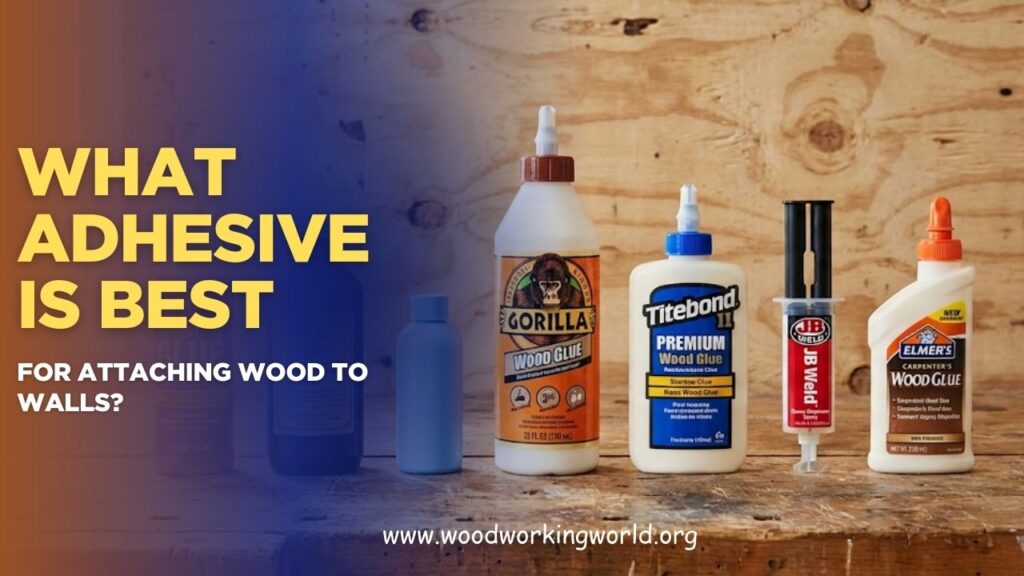
What adhesive is best for attaching wood to walls?
Trying to securely attach wood to your walls without the hassle of nails or screws? Choosing the right adhesive can make all the difference in achieving a clean, durable, and long-lasting result. With so many glues and bonding products on the market, it can be tough to know which one will hold up over time—or whether you’ll end up with a sticky mess instead of a solid attachment.
In this complete guide to the best adhesives for attaching wood to walls, we’ll explore top-performing options, key factors to consider (like surface type and load weight), expert tips for application, and safety advice to help you make the right choice for your project.
👉 CLICK HERE to Unlock 16,000+ DIY woodworking plans now
Why Choosing the Right Adhesive Matters
Many DIYers assume “glue is glue,” but not all adhesives are created equal. Using the wrong product can lead to weak bonds, sagging wood, surface damage, or total failure over time.
Wood is a natural material that expands and contracts with humidity and temperature changes. Walls — whether drywall, plaster, brick, or concrete — behave differently. The right adhesive accounts for this movement and creates a durable bond.
Proper adhesive selection helps you:
- Achieve a strong, professional-looking installation
- Avoid drilling holes or damaging walls
- Prevent wood from warping, loosening, or falling
- Save time and money on repairs
- Extend the lifespan of your woodworking project
Think of adhesive choice as part of your design and structural planning — not an afterthought.
👉 CLICK HERE to Unlock 16,000+ DIY woodworking plans now
Best Adhesives for Attaching Wood to Walls (Expert-Approved)
Below are the most reliable and commonly recommended adhesives for wood-to-wall applications.
🧰 1. Heavy-Duty Construction Adhesive
Best for: Most interior wood-to-wall projects
Strength: High
Construction adhesive is the go-to choice for attaching wood to walls. It’s designed to bond different materials together, including wood, drywall, plaster, masonry, and concrete.
Why experts recommend it:
- Strong initial grab and long-term hold
- Fills small gaps between uneven surfaces
- Works on vertical applications
- Available in interior and exterior formulas
Common uses:
- Wall paneling and shiplap
- Wood trim and molding
- Accent boards
- Lightweight shelves (with support during curing)
👉 Pro Tip: Apply adhesive in a zig-zag or “S” pattern to distribute weight evenly.
🪵 2. Panel Adhesive (Wood-to-Wall Adhesive)
Best for: Decorative panels and thin boards
Strength: Medium to high
Panel adhesives are specifically designed for bonding wood panels to walls. They dry faster than standard construction adhesives and reduce the risk of bubbling or panel warping.
Why it works well:
- Designed for thin wood and veneers
- Fast grab time
- Minimal expansion while curing
- Paintable once dry
This adhesive is ideal for wainscoting, beadboard, and decorative wall features.
🔩 3. Epoxy Adhesive (Two-Part)
Best for: Heavy wood and masonry walls
Strength: Very high
Epoxy adhesives consist of a resin and hardener that create an extremely strong bond. They’re best used when attaching wood to brick, concrete, or uneven surfaces.
Advantages:
- Exceptional load-bearing strength
- Resistant to moisture and temperature changes
- Ideal for permanent installations
Downside:
- Short working time
- More expensive
- Difficult to remove once cured
👉 Use epoxy only when maximum strength is required.
🧲 4. Polyurethane Adhesive
Best for: Moist or high-humidity environments
Strength: High
Polyurethane adhesives expand slightly as they cure, creating a tight bond that works well in bathrooms, kitchens, or basements.
Benefits:
- Waterproof
- Bonds wood to drywall, concrete, or metal
- Extremely durable
Caution: Expansion can push wood out of alignment if not clamped properly.
🪛 5. Liquid Nails® (Specialty Formulas)
Best for: General DIY wood installations
Strength: Varies by product
Liquid Nails offers multiple formulas — not all are equal. Look for:
- “Heavy Duty”
- “High Strength”
- “Vertical Projects”
These versions are suitable for wood-to-wall bonding when applied correctly.
👉 Always read the label to ensure compatibility with your wall surface.

How to Properly Attach Wood to Walls Using Adhesive
Using the right adhesive is only half the job. Proper application ensures long-term success.
✅ Step-by-Step Application Guide
- Prepare the surfaces
- Clean the wall and wood to remove dust and grease
- Lightly sand glossy surfaces for better adhesion
- Dry-fit the wood
- Test placement and mark alignment points
- Apply adhesive evenly
- Use a caulk gun
- Avoid excessive glue that can squeeze out
- Press firmly into place
- Apply steady pressure
- Use painter’s tape, clamps, or temporary bracing
- Allow full curing time
- Typically 24–72 hours depending on adhesive
👉 Pro Tip: For shelves or load-bearing pieces, combine adhesive with hidden screws or wall anchors.
Common Mistakes to Avoid
❌ Using standard wood glue (PVA) — it’s not designed for walls
❌ Skipping surface preparation
❌ Removing supports too early
❌ Using lightweight adhesive for heavy wood
❌ Ignoring humidity and temperature conditions
Avoiding these mistakes can prevent structural failure and wall damage.
Can Adhesive Alone Hold Shelves?
Short answer: It depends.
Adhesive alone can hold:
- Decorative shelves
- Lightweight floating features
- Non-load-bearing wood accents
However, for bookshelves, storage shelves, or anything holding weight:
- Use adhesive + screws into studs or anchors
- Safety should always come first
Indoor vs. Outdoor Applications
Indoor Use
- Standard construction adhesive
- Panel adhesive
- Polyurethane (for moisture-prone areas)
Outdoor Use
- Exterior-rated construction adhesive
- Waterproof polyurethane adhesive
- Always seal wood properly
👉 Outdoor projects require UV and moisture resistance.
FAQs: Best Adhesive for Attaching Wood to Walls
1. Can I glue wood directly to drywall?
Yes, with heavy-duty construction adhesive. Support the wood while curing.
2. What’s the strongest adhesive for wood to wall?
Two-part epoxy offers the highest strength.
3. Will adhesive damage my wall if removed?
Strong adhesives may pull paint or drywall paper. Removal should be done carefully.
4. How long does adhesive take to fully cure?
Initial grab may be quick, but full cure usually takes 24–72 hours.
5. Can I paint over adhesive?
Most adhesives are paintable after curing — check product instructions.
Adhesive Comparison Table
| Adhesive Type | Strength | Best Use | Wall Types |
|---|---|---|---|
| Construction Adhesive | ⭐⭐⭐⭐ | Most projects | Drywall, plaster |
| Panel Adhesive | ⭐⭐⭐ | Decorative panels | Interior walls |
| Epoxy | ⭐⭐⭐⭐⭐ | Heavy wood | Brick, concrete |
| Polyurethane | ⭐⭐⭐⭐ | Moist areas | Drywall, masonry |
| Wood Glue (PVA) | ⭐ | Crafts only | Wood only |
Why Proper Planning Makes All the Difference
Many failed installations happen not because of poor craftsmanship — but poor planning. Knowing your materials, wall type, weight load, and adhesive limitations separates amateur DIY from professional results.
Ted’s Woodworking plans emphasize this planning-first approach, helping DIYers build smarter, safer, and stronger projects from the start.
🛠️ Why DIYers Love Ted’s 16,000 Woodworking Plans
📚 Thousands of wall-mounted, furniture, and home projects
✂️ Clear step-by-step instructions
🧰 Beginner to advanced skill levels
💰 Build for your home or profit
🔥 Limited-time access at massive savings
Final Verdict: What Adhesive Is Best for Attaching Wood to Walls?
The best adhesive depends on your project — but for most DIYers:
✔ Use heavy-duty construction adhesive for interior projects
✔ Choose panel adhesive for decorative wood
✔ Use epoxy for maximum strength and masonry walls
✔ Combine adhesive with mechanical support when safety matters
When done correctly, adhesive installation creates a clean, modern finish that enhances both strength and style.
👉 CLICK HERE to Unlock 16,000+ DIY woodworking plans now