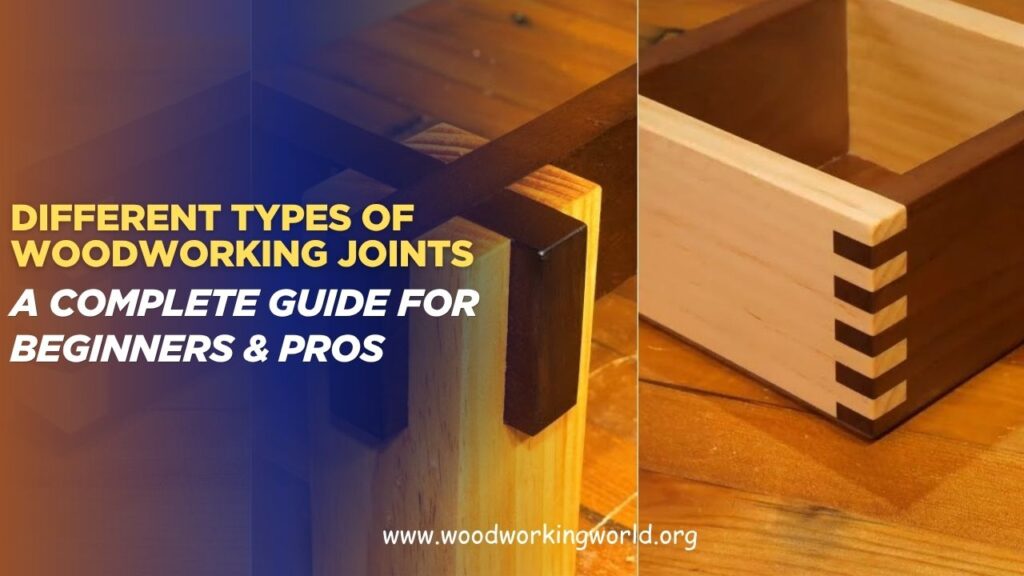
Different Types of Woodworking Joints: A Complete Guide for Beginners & Pros
Struggling to understand which woodworking joints to use—and when? Whether you’re a beginner learning the basics or a seasoned woodworker aiming for stronger, cleaner builds, mastering the right joints is essential. The type of joint you choose can affect everything from strength and stability to appearance and overall craftsmanship. Yet with so many options—dovetail, mortise and tenon, box joints, lap joints—it’s easy to feel overwhelmed.
In this complete guide, we’ll break down the most important types of woodworking joints, how they work, when to use each one, and the skill level required for each technique. You’ll also discover practical tips, variations, and common mistakes to avoid so you can build furniture and projects that are not only beautiful but structurally sound. Whether you’re just starting out or refining your craft, this guide will help you choose and master the right joints every time.
👉 CLICK HERE to Unlock 16,000+ DIY woodworking plans now
Why Woodworking Joints Matter
Woodworking is more than cutting wood and screwing it together. The different types of woodworking joints you choose will determine:
- Strength and stability
- Aesthetics and finish
- Ease of assembly
- Project longevity
Key takeaway: The right joint makes your project stronger, longer-lasting, and more polished.
Most Popular Different Types of Woodworking Joints
1. 🪵 Butt Joint
The simplest joint where two pieces of wood are joined end-to-end.
- Easiest to make
- Requires screws, nails, or glue for strength
- Least durable without reinforcement
Best for: Simple picture frames, temporary structures
2. 🔩 Dado Joint
A slot cut into one piece to house another, often perpendicular.
- Strong support
- Common in cabinetry
- Requires precision
Best for: Bookshelves, drawers, cabinets
3. 🧩 Dovetail Joint
Interlocking wedge-shaped cuts that fit together snugly.
- Highly durable
- Decorative appearance
- Challenging for beginners
Best for: Drawers, heirloom furniture
4. 🪚 Mortise and Tenon Joint
A classic joint where a “tenon” fits into a “mortise” hole.
- Extremely strong
- Traditional in fine furniture
- Can be glued or pegged
Best for: Chairs, tables, doors
5. 🧱 Lap Joint
Two boards overlapping each other partially or fully.
- Simple and effective
- Variants: full-lap, half-lap
- Offers decent strength
Best for: Frames, partitions

6. 🧲 Biscuit Joint
Uses oval-shaped biscuits inserted into slots to align and strengthen.
- Easy alignment
- Needs a biscuit joiner tool
- Stronger than a butt joint
Best for: Tabletops, edge-joined panels
7. 🧰 Pocket-Hole Joint
Created by drilling angled holes for screws.
- Quick and easy
- Requires a jig
- Hidden fasteners
Best for: Face frames, cabinets
8. 🧱 Box Joint (Finger Joint)
Square fingers interlock like dovetails, but simpler.
- Strong and square
- Easier to cut than dovetails
- Clean look
Best for: Boxes, drawers
When to Use Each Woodworking Joint
| Project Type | Recommended Joint |
|---|---|
| Furniture | Mortise & Tenon, Dovetail |
| Shelving | Dado, Pocket-Hole |
| Boxes/Drawers | Dovetail, Box Joint |
| Frames | Lap, Butt |
| Panels/Tabletops | Biscuit, Dowel, Pocket-Hole |
Key takeaway: Match the joint to your project’s needs, tools, and your own experience level.
Tips for Choosing the Right Woodworking Joint
- Start simple with butt and lap joints if you’re a beginner.
- Use jigs for pocket holes and dovetails for improved accuracy.
- Test fit all joints before applying glue.
- Practice on scrap wood before cutting into your project pieces.
👉 CLICK HERE to Unlock 16,000+ DIY woodworking plans now
Conclusion: Build Better With the Right Joint
Understanding the different types of woodworking joints is key to crafting pieces that are strong, functional, and beautiful. From basic butt joints to elegant dovetails, mastering these essential connections will take your woodworking projects to the next level.
Ready to Get Hands-On?
Subscribe to our newsletter for free downloadable plans, tool guides, and weekly tips to boost your skills. Start your next project with confidence today!
👉 CLICK HERE to Unlock 16,000+ DIY woodworking plans now