Classic mortise and tenon woodworking joints for durability
Looking for a woodworking technique that delivers unbeatable strength and long-lasting durability? The classic mortise and tenon joint has been a trusted choice for centuries, prized by furniture makers and carpenters for its exceptional stability and clean, professional look. Whether you’re building tables, chairs, frames, or fine furniture, mastering this timeless joint can dramatically improve the quality and lifespan of your projects.
In this guide, we’ll break down how mortise and tenon joints work, why they’re so reliable, the different types you can use, and the best ways to incorporate them into your woodworking for rock-solid, lasting results.
👉 CLICK HERE to Unlock 16,000+ DIY woodworking plans now
What is a Mortise and Tenon Joint?
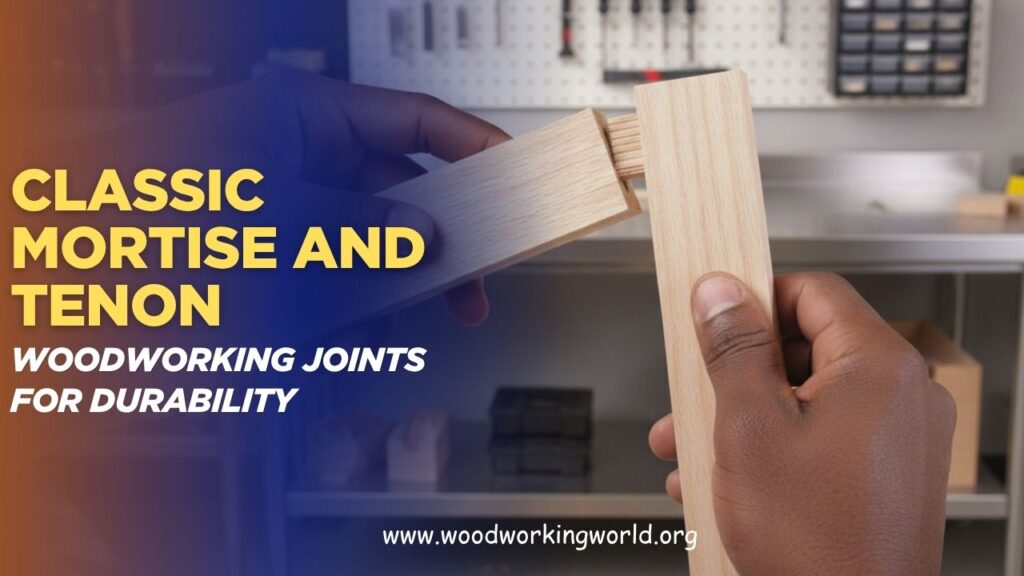
A mortise and tenon joint is a woodworking technique where a tenon (a protruding rectangular or square section) fits into a mortise (a corresponding hole or cavity). This interlocking design provides a robust connection, often reinforced with glue or pegs for added strength.
The History and Importance of Mortise and Tenon Joints
This joinery technique dates back thousands of years, seen in ancient Egyptian furniture and traditional Japanese temples. The enduring popularity of the mortise and tenon joint speaks to its remarkable strength and efficiency. Unlike modern fasteners, this joint distributes weight evenly, reducing stress points and prolonging the lifespan of the structure.
👉 CLICK HERE to Unlock 16,000+ DIY woodworking plans now
Benefits of Mortise and Tenon Joints
- Exceptional Strength – Provides superior load-bearing capability.
- Long-Lasting Durability – Withstands environmental stresses better than nails or screws.
- Aesthetic Appeal – Creates clean and professional-looking joints.
- Versatility – Suitable for furniture, doors, windows, and timber framing.
- Traditional and Time-Tested – Used for centuries in various woodworking applications.
Types of Mortise and Tenon Joints
There are several variations of the mortise and tenon joint, each designed for specific applications:
- Through Mortise and Tenon – The tenon passes entirely through the mortise and is visible on the opposite side.
- Blind (Stub) Mortise and Tenon – The tenon does not extend through the entire mortise, making it invisible from the outside.
- Haunched Mortise and Tenon – A small notch (haunch) is added to the tenon for extra strength.
- Wedged Mortise and Tenon – A wedge is inserted to expand the tenon and create a tighter fit.
- Drawbored Mortise and Tenon – Uses offset peg holes to pull the joint tightly together.
Step-by-Step Guide to Creating a Mortise and Tenon Joint
Materials and Tools Required:
- Wood stock (hardwood recommended for durability)
- Marking gauge
- Chisels and mallet
- Tenon saw
- Drill and forstner bits (optional)
- Clamps
- Wood glue
- Sandpaper
Step 1: Planning and Measuring
- Choose the wood type and thickness suitable for your project.
- Mark out the mortise and tenon dimensions using a marking gauge and square.
- Ensure the tenon width is about 1/3 the thickness of the wood for optimal strength.
Step 2: Cutting the Mortise
- Use a drill press or chisel to remove the bulk of the material inside the marked mortise.
- Clean and refine the mortise using sharp chisels, ensuring straight edges and uniform depth.
Step 3: Cutting the Tenon
- Saw along the marked lines to shape the tenon, ensuring precise cuts.
- Use a shoulder plane or chisel to fine-tune the tenon for a snug fit.
Step 4: Fitting and Assembling
- Test fit the tenon into the mortise; it should slide in firmly without forcing.
- Adjust with chisels if necessary to achieve a tight but not overly snug fit.
- Apply wood glue (if desired) and clamp the joint together until dry.
Step 5: Reinforcement and Finishing
- If additional strength is needed, add pegs or wedges to secure the joint.
- Sand the joint smooth and apply finish or stain as desired.

Comparison Table: Mortise and Tenon vs. Other Joints
| Joinery Type | Strength | Durability | Aesthetic Appeal | Ease of Construction |
|---|---|---|---|---|
| Mortise & Tenon | Excellent | High | High | Moderate |
| Dovetail | Excellent | High | High | Difficult |
| Pocket Hole | Moderate | Low | Moderate | Easy |
| Biscuit Joint | Moderate | Moderate | High | Easy |
| Doweling | Good | Moderate | Moderate | Moderate |
Expert Quote on Mortise and Tenon Joints
“A well-crafted mortise and tenon joint is the backbone of durable woodworking. When executed properly, it creates a seamless blend of function and form.” – James Hamilton, Master Woodworker
Common Applications of Mortise and Tenon Joints
- Furniture Making – Used in chairs, tables, cabinets, and beds.
- Timber Framing – Essential for constructing strong wooden frames.
- Architectural Woodwork – Seen in windows, doors, and staircases.
- Boat Building – Provides strong, waterproof joints in wooden boats.
👉 CLICK HERE to Unlock 16,000+ DIY woodworking plans now
Frequently Asked Questions (FAQ)
1. How strong is a mortise and tenon joint?
A properly made mortise and tenon joint is one of the strongest woodworking joints, capable of bearing significant loads without breaking.
2. Do I need glue for a mortise and tenon joint?
While glue enhances the bond, traditional versions rely on tight-fitting joints and wooden pegs for reinforcement.
3. What type of wood is best for mortise and tenon joints?
Hardwoods like oak, maple, and walnut are ideal for durability, while softwoods can be used for lightweight applications.
4. Can I make a mortise and tenon joint with power tools?
Yes, mortise and tenon joints can be made using a drill press, router, or mortising machine for efficiency.
5. What are common mistakes when making this joint?
- Cutting the tenon too loose or too tight.
- Misaligning the mortise and tenon.
- Not cleaning up the mortise properly, leading to poor fitment.
Conclusion
The mortise and tenon joint remains a cornerstone of woodworking due to its unmatched strength and longevity. Whether you are a beginner or a seasoned craftsman, mastering this joint will elevate your woodworking projects. By following proper techniques and avoiding common pitfalls, you can create durable and visually appealing furniture that stands the test of time. Happy woodworking!
👉 CLICK HERE to Unlock 16,000+ DIY woodworking plans now