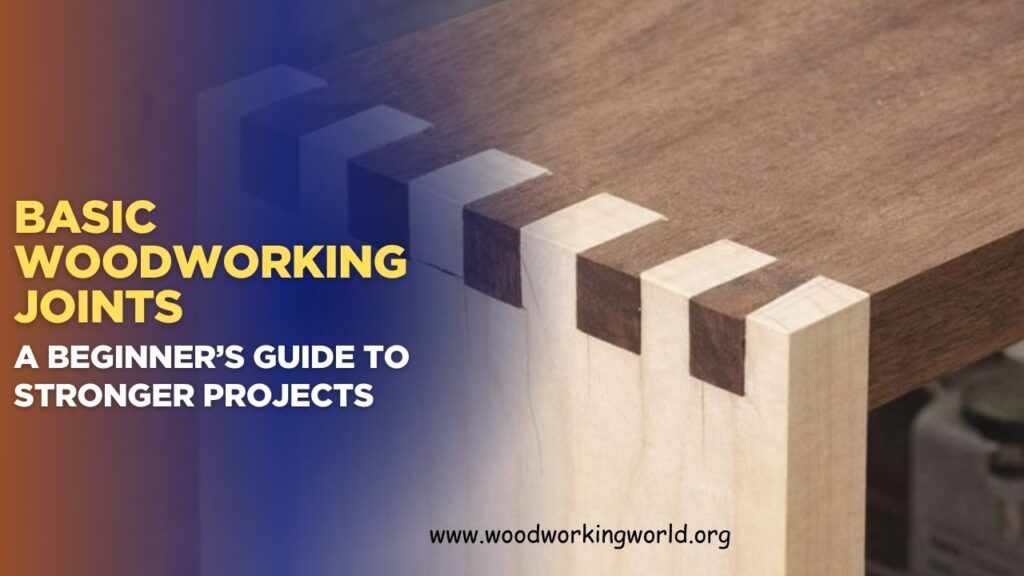
Basic Woodworking Joints: A Beginner’s Guide to Stronger Projects
Struggling to build projects that feel sturdy and reliable—no matter how carefully you measure and cut your wood? For beginners, one of the biggest challenges in woodworking is understanding which joints to use and how to make them correctly. But with so many options—lap joints, butt joints, dowels, biscuits, pocket holes, and more—how do you know which simple joints offer the strength, stability, and ease of use your project needs?
In “Basic Woodworking Joints: A Beginner’s Guide to Stronger Projects,” we break down the easiest and most reliable joints every new woodworker should learn. You’ll discover how each joint works, where to use it, and why it matters for durability and alignment. From building shelves and frames to small furniture and DIY home projects, this guide helps you stop guessing and start creating solid, long-lasting pieces with confidence—even if you’re just getting started.
👉 CLICK HERE to Unlock 16,000+ DIY woodworking plans now
Why Understanding Basic Woodworking Joints Matters
Wood joins are the foundation of woodworking. Even the finest wood and tools can’t make up for weak connections. Knowing the basic woodworking joints equips you to:
- Build projects that last
- Create clean, professional-looking results
- Choose the right joint for every application
- Grow your skills faster with confidence
Key takeaway: Learn these joints early—your projects will be stronger, straighter, and far more satisfying.
👉 CLICK HERE to Unlock 16,000+ DIY woodworking plans now
1. 🪵 Butt Joint
What It Is
The simplest type of joint where two pieces of wood are joined end-to-end or edge-to-edge.
Features
- Easy to make
- Requires nails, screws, or glue
- Not very strong on its own
Best Used For
- Framing
- Temporary builds
- Practice projects
2. 🧩 Dado Joint
What It Is
A groove cut into one piece of wood where another board fits in perpendicularly.
Features
- Provides strong support
- Often used without screws
- Requires precision cutting
Best Used For
- Bookshelves
- Drawer dividers
- Cabinetry
3. 🔩 Lap Joint
What It Is
Two pieces of wood overlapping each other to form a flush surface.
Features
- Better strength than a butt joint
- Simple layout
- Can be glued or fastened
Best Used For
- Frames
- Boxes
- Doors
4. 🪚 Miter Joint
What It Is
Two angled cuts (usually 45°) joined together to form a corner.
Features
- Clean and professional look
- Often reinforced with splines or biscuits
- Weak without reinforcement
Best Used For
- Picture frames
- Boxes
- Trim work
5. 🧰 Pocket-Hole Joint
What It Is
A method where angled holes are drilled for screws that join two pieces of wood.
Features
- Very beginner-friendly
- Fast and strong
- Requires a pocket-hole jig
Best Used For
- Cabinets
- Face frames
- Furniture

Bonus: 🧱 Box Joint (Finger Joint)
While slightly more advanced, this joint is worth learning early for box and drawer construction.
Features
- Interlocking fingers offer great strength
- Visually striking
- Requires accurate layout
How to Practice Basic Woodworking Joints
Start with simple scrap wood and gradually increase complexity. Use hand tools or power tools based on your comfort level.
Practice tips:
- Mark carefully using a square and pencil
- Test-fit before applying glue
- Clamp securely during drying
- Label your practice joints for reference later
Tools That Make Joint Work Easier
- Combination square
- Wood glue
- Pocket-hole jig
- Clamps
- Miter saw or circular saw
Key takeaway: The right tools help you build better joints—faster and with more accuracy.
Interested in advancing your skills? Check out our detailed article on different types of woodworking joints to move beyond the basics.
For additional tutorials and visual guides, visit Wood Magazine’s Joinery Techniques — a trusted authority in woodworking education.
Conclusion: Build With Confidence Using Basic Woodworking Joints
Mastering basic woodworking joints is the first step to building reliable and beautiful woodworking projects. Whether you’re constructing a bookshelf, box, or frame, the right joint brings everything together—literally.
Ready to Get Started?
Grab some scrap wood and start practicing today! Subscribe to our newsletter for free tutorials, woodworking plans, and tool reviews straight to your inbox.
👉 CLICK HERE to Unlock 16,000+ DIY woodworking plans now