Essential woodworking joint tools for perfect craftsmanship
Mastering woodworking joints is at the heart of creating durable, precise, and beautiful projects, and having the right tools makes all the difference. From simple butt joints to complex dovetails, each joint requires specific instruments to ensure accuracy and strength.
In this complete guide on Essential Woodworking Joint Tools for Perfect Craftsmanship, we’ll explore the must-have tools for cutting, shaping, and assembling joints, as well as tips for using them effectively. By the end, you’ll have the knowledge to select and use the right tools to achieve flawless, professional-quality woodworking results.
👉 CLICK HERE to Unlock 16,000+ DIY woodworking plans now
Understanding Woodworking Joints
Woodworking joints are the foundation of any woodworking project. They determine the strength, durability, and aesthetic appeal of your work. Here are some of the most common types of woodworking joints:
- Butt Joint – The simplest joint where two pieces are joined end-to-end.
- Dado Joint – A slot is cut into one piece of wood to accommodate another piece.
- Rabbet Joint – Similar to a dado but located at the edge of the wood.
- Mortise and Tenon Joint – One of the strongest joints, where a tenon fits into a mortise.
- Dovetail Joint – A classic joint used in furniture making for its strength and aesthetic appeal.
- Lap Joint – Two pieces overlap for additional surface area and stability.
- Finger Joint – Interlocking fingers create a strong and visually appealing connection.
Each joint requires specific tools to achieve precision and strength. Let’s explore these tools in detail.
👉 CLICK HERE to Unlock 16,000+ DIY woodworking plans now
Essential Tools for Creating Perfect Woodworking Joints
1. Hand Tools
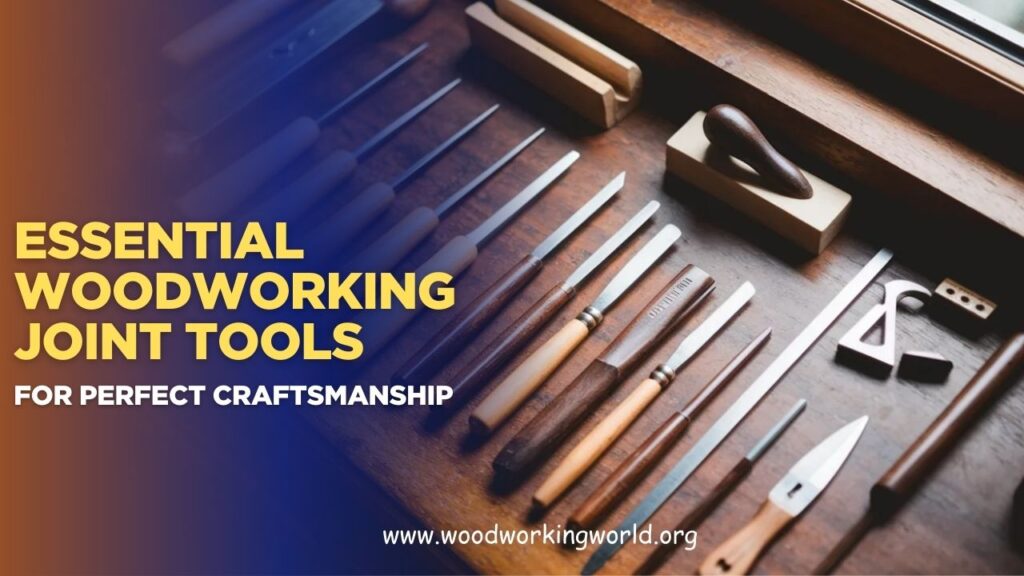
- Chisels – Essential for mortise and tenon joints, dovetail joints, and general shaping.
- Hand Saws – Includes dovetail saws, tenon saws, and coping saws for precise cuts.
- Mallet – Used for driving chisels into wood without damaging the tool.
- Marking Gauge – Ensures accurate layout lines for joints.
- Try Square – Ensures perfectly squared edges and corners.
- Clamps – Holds wood pieces together while the glue dries.
2. Power Tools
- Table Saw – Ideal for making precise cuts, dados, and rabbets.
- Router – Used for creating intricate joints like dovetails and rabbets.
- Jointer and Planer – Ensures wood surfaces are flat and smooth before joining.
- Drill Press – Makes precise holes for dowels and mortise and tenon joints.
- Bandsaw – Great for cutting complex shapes and curves in joint making.
3. Measuring and Marking Tools
- Combination Square – Ensures precise angles and straight lines.
- Bevel Gauge – Used for marking angles for dovetail and mitre joints.
- Marking Knife – Provides more precision than a pencil for marking joint cuts.
- Calipers – Measures thickness and depth accurately.
4. Joinery Accessories
- Doweling Jigs – Helps in precise alignment for dowel joints.
- Dovetail Jigs – Makes dovetail joints easier and more accurate.
- Pocket Hole Jigs – Useful for creating strong, hidden joints.
- Glue and Fasteners – Essential for reinforcing joints.
Step-by-Step Guide to Creating Perfect Joints
Step 1: Choose the Right Joint
Identify the best joint for your project based on strength, durability, and aesthetics.
Step 2: Mark and Measure Accurately
Use marking gauges, combination squares, and marking knives for precise layouts.
Step 3: Cut the Joint
Use hand tools or power tools to cut joints accurately, ensuring clean edges.
Step 4: Test Fit the Joint
Before applying glue, dry-fit the pieces together to check alignment and fit.
Step 5: Assemble and Clamp
Apply glue if necessary, and use clamps to hold the joint securely while drying.
Step 6: Final Adjustments
Sand, plane, or chisel any excess material to ensure a perfect fit.

Comparison Table of Woodworking Joint Tools
| Tool Type | Function | Best Used For |
|---|---|---|
| Chisels | Shaping and refining joints | Mortise & Tenon, Dovetails |
| Hand Saws | Cutting precise lines | Dovetail, Tenon Joints |
| Table Saw | Making accurate cuts | Dado, Rabbet Joints |
| Router | Creating intricate joints | Dovetail, Lap Joints |
| Drill Press | Drilling precise holes | Dowels, Mortise Joints |
| Clamps | Holding pieces together | All joints |
| Marking Gauge | Ensuring precise measurements | All joints |
Expert Tip
“Measure twice, cut once. Precision is key to creating perfect woodworking joints.” – Traditional Woodworking Proverb
Frequently Asked Questions (FAQs)
1. What is the strongest woodworking joint?
The mortise and tenon joint is considered the strongest due to its deep connection and glue surface area.
2. Which joint is best for beginners?
The butt joint and dowel joint are the easiest for beginners as they require minimal tools and skills.
3. Do I need power tools to make strong joints?
No, hand tools like chisels and handsaws can create strong joints, but power tools speed up the process and increase precision.
4. How can I ensure perfect alignment when making joints?
Use marking gauges, try squares, and jigs to maintain accuracy in your cuts and alignments.
5. What’s the best glue for woodworking joints?
PVA wood glue is commonly used, but epoxy or hide glue can be better for specific applications.
6. How do I avoid gaps in my joints?
Ensure precise measuring, cutting, and clamping. Dry-fitting pieces before final assembly helps avoid misalignments.
👉 CLICK HERE to Unlock 16,000+ DIY woodworking plans now
Conclusion
Mastering woodworking joints is essential for creating durable and aesthetically pleasing projects. By using the right tools, measuring accurately, and following a structured process, you can achieve perfect craftsmanship in your woodworking endeavors. Whether using hand tools or power tools, precision and practice are key to achieving professional-quality joints. Keep experimenting, learning, and improving your woodworking skills to create beautiful, long-lasting projects.
👉 CLICK HERE to Unlock 16,000+ DIY woodworking plans now