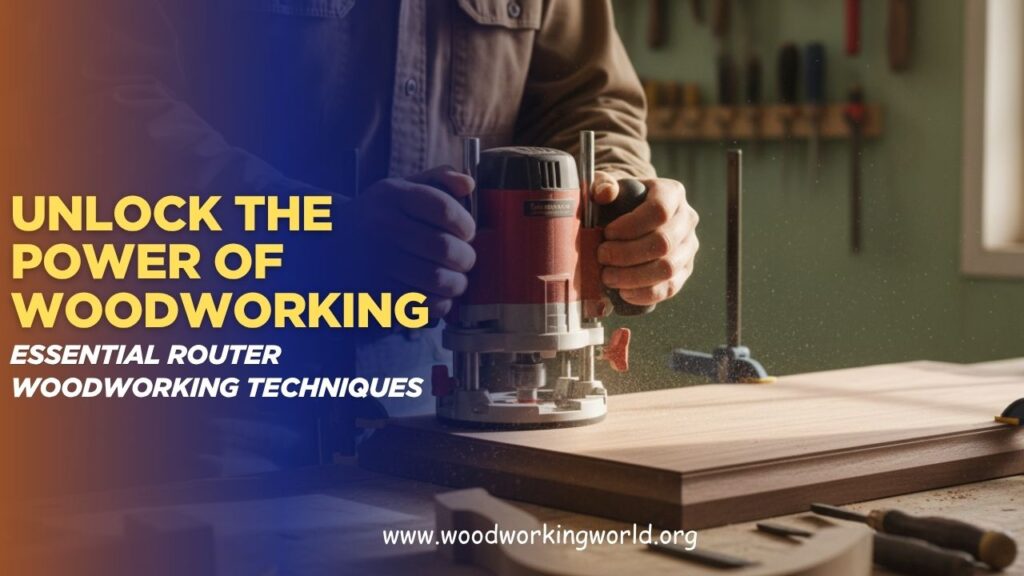
Unlock the Power of Woodworking: Essential Router Woodworking Techniques
Discovering the versatility of woodworking starts with mastering the right tools, and a router is one of the most powerful in any woodworker’s arsenal. From shaping edges to creating intricate patterns, understanding essential router techniques can elevate your projects from ordinary to professional-quality.
In this guide, we’ll walk you through the must-know router woodworking techniques, including tips on safety, tool selection, and practical applications—so you can unlock the full potential of your woodworking skills and tackle projects with confidence and precision.
👉 CLICK HERE to Unlock 16,000+ DIY woodworking plans now
Why Routers Are Essential in Woodworking
Routers are indispensable because they can:
- Shape edges: Smooth, rounded, or ornate profiles for furniture and trim.
- Cut grooves and dados: Perfect for shelving, panels, and joinery.
- Create patterns and inlays: Add decorative flair or custom designs.
- Increase efficiency: Replace multiple hand tools for many cutting and shaping tasks.
Think of the router as a multifunctional powerhouse that elevates both the functionality and aesthetic appeal of your projects.
👉 CLICK HERE to Unlock 16,000+ DIY woodworking plans now
Step 1: Choose the Right Router
Selecting the right router is the first step toward success. The main types include:
Fixed-Base Router
- Best For: Straight cuts, shallow grooves, edge work.
- Pros: Stable, precise, beginner-friendly.
- Cons: Limited versatility for plunge or angled cuts.
Plunge Router
- Best For: Inlays, mortises, dados, and precise depth cuts.
- Pros: Can plunge into the wood mid-cut for controlled depth.
- Cons: Heavier and requires careful handling.
Combination Router
- Best For: Versatility in switching between fixed and plunge configurations.
- Pros: Combines stability with plunge functionality.
- Cons: Slightly more complex and expensive.
Pro Tip: Beginners should start with a fixed-base router for simpler edge work and advance to a plunge router for more complex cuts.
Step 2: Prioritize Safety
Routers spin at high speeds, so safety is crucial:
- Wear safety glasses and hearing protection.
- Keep hair, loose clothing, and jewelry away from moving parts.
- Use a router table or clamps for small or thin workpieces.
- Always unplug the router before changing bits or adjusting depth.
- Ensure your workpiece is securely clamped to prevent slipping or kickback.
Pro Tip: Practice on scrap wood before cutting your final piece to get comfortable with the router’s speed and feed rate.
Step 3: Master Essential Router Techniques
Routers can perform a variety of tasks. Here are the key techniques:
1. Edge Routing
- Purpose: Smooth, rounded, or decorative edges.
- Technique:
- Choose the appropriate bit (round-over, chamfer, ogee).
- Adjust the cutting depth.
- Move the router against the rotation of the bit for clean cuts.
- Pro Tip: Use an edge guide or fence for straight edges.
2. Grooves and Dados
- Purpose: Create slots for shelves, panels, or joinery.
- Technique:
- Mark the groove line and adjust depth.
- Use a straight bit and guide fence to cut evenly.
- Pro Tip: Make multiple shallow passes instead of a single deep cut to prevent tear-out.
3. Mortises and Tenons
- Purpose: Strong joints for furniture or frames.
- Technique:
- Use a plunge router with a straight bit for mortises.
- Remove waste gradually for a snug fit.
- Pro Tip: Frequently test-fit the joint to ensure precision.
4. Template Routing and Inlays
- Purpose: Add intricate designs or decorative patterns.
- Technique:
- Secure a template on your workpiece.
- Use a bearing bit or guide bushing to follow the template.
- Pro Tip: Clamp the template firmly and test on scrap wood first.
5. Rabbets and Recesses
- Purpose: Fit boards together or recess panels.
- Technique:
- Use a straight bit with appropriate depth.
- Run along a fence or guide for consistent width.
- Pro Tip: Make multiple passes for clean, precise rabbets.
Step 4: Selecting Router Bits
Router bits define the precision and finish quality of your work:
- Straight Bits: Grooves, dados, rabbets
- Flush-Trim Bits: Trimming laminates or veneers
- Round-Over Bits: Smooth decorative edges
- Chamfer Bits: Angled edges
- V-Groove Bits: Sign making or decorative lines
- Cove Bits: Concave edges
Pro Tip: High-quality carbide bits last longer and cut cleaner. Replace dull bits immediately to avoid tear-out and burning.
Step 5: Router Setup and Depth Adjustment
Proper setup ensures precision:
- Set cutting depth gradually; multiple shallow passes are safer than one deep cut.
- Test on scrap wood to confirm depth and alignment.
- Maintain consistent feed speed—too fast causes tear-out, too slow can burn the wood.
- Use fences or guides for straight, repeatable cuts.
Pro Tip: For small or intricate pieces, a router table provides stability and better control.
🛠️ Ted’s 16,000 Woodworking Plans – Why You’ll Love It


Step 6: Finishing Routed Wood
After routing, finish your project professionally:
- Sand edges with fine-grit sandpaper to remove roughness.
- Clean all dust before applying finishes.
- Use stain, oil, or polyurethane depending on the project.
- Round sharp corners for safety and aesthetics.
Pro Tip: Test finishes on scrap wood to ensure desired color and absorption.
Step 7: Common Mistakes to Avoid
❌ Using dull bits, causing rough edges or tear-out
❌ Forcing the router too fast, resulting in burning
❌ Ignoring safety precautions
❌ Skipping test cuts on scrap wood
❌ Failing to secure workpieces properly
Pro Tip: Take your time and make incremental cuts for precise, clean results.
FAQs: Router Woodworking Techniques
1. Can beginners safely use routers?
- Yes, with proper safety equipment, clamping, and practice on scrap wood.
2. Should I buy a fixed or plunge router first?
- Fixed-base routers are simpler for beginners; plunge routers are better for advanced cuts and inlays.
3. How can I prevent tear-out?
- Use sharp bits, multiple shallow passes, and move the router against bit rotation.
4. What wood types work best with routers?
- Hardwoods like oak, maple, and cherry give clean edges; softwoods like pine are good for decorative cuts.
5. Can routers be used freehand?
- Experienced woodworkers can, but beginners should use a fence, guide, or template for accuracy.
👉 CLICK HERE to Unlock 16,000+ DIY woodworking plans now
Final Verdict: Master Your Router Skills
Routers are powerful tools that unlock creativity and precision in woodworking. By mastering edge routing, grooves, mortises, inlays, and rabbets, you can produce professional-quality furniture, cabinets, and décor pieces.
Key Takeaways:
✔ Choose the right router type for your project
✔ Prioritize safety with protective gear and clamps
✔ Learn foundational techniques before attempting advanced cuts
✔ Use high-quality bits and proper depth settings
✔ Finish routed pieces for a professional appearance
Pro Tip: Practice, patience, and proper technique are the keys to mastering router woodworking. Start with simple cuts, experiment with decorative edges, and gradually incorporate templates and inlays to elevate your craftsmanship.
👉 CLICK HERE to Unlock 16,000+ DIY woodworking plans now