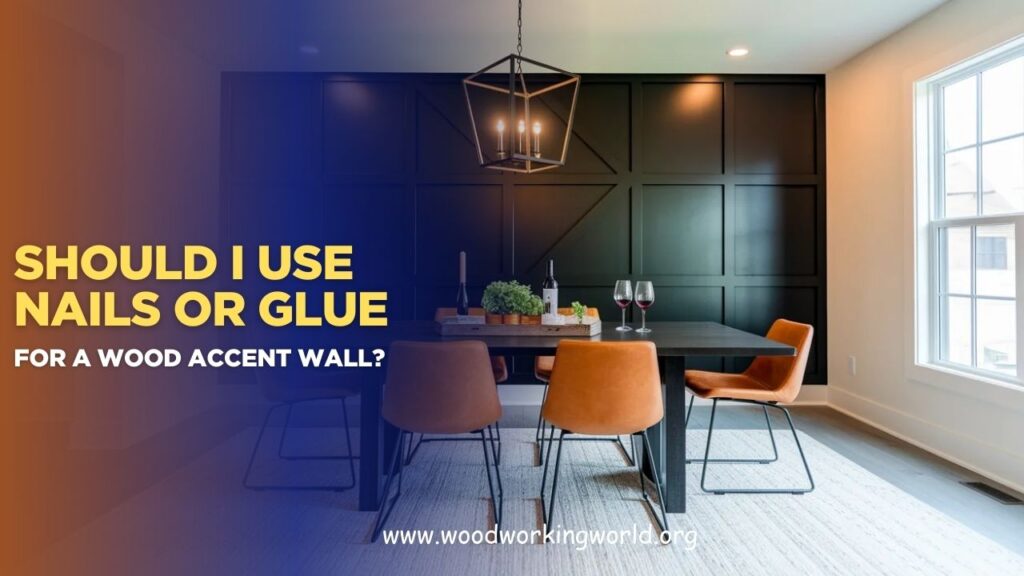
Should I use nails or glue for a wood accent wall?
Wondering whether nails or glue are the best choice for installing your wood accent wall? The right method can make all the difference in terms of durability, ease of installation, and the overall appearance of your wall. Using the wrong technique might cause boards to loosen, damage your surfaces, or make future adjustments difficult.
In this complete guide on whether to use nails or glue for a wood accent wall, we’ll break down the pros and cons of each method, explain when to use one over the other, and provide practical tips for achieving a secure, professional-looking finish. This way, you can create a stylish accent wall that lasts without unnecessary hassle.
👉 CLICK HERE to Unlock 16,000+ DIY woodworking plans now
Why Choosing the Right Installation Method Matters
The method you choose for attaching wood planks to your wall impacts several key factors:
- Durability: Heavy or large planks require a secure attachment to prevent warping or falling.
- Appearance: Nails can leave visible holes, while glue creates a seamless finish.
- Ease of installation: Some methods are faster and require fewer tools, while others demand precision and patience.
- Removability and adjustments: Glue is permanent, whereas nails or brads allow for repositioning.
Selecting the right method ensures your wall looks great and stands the test of time.
👉 CLICK HERE to Unlock 16,000+ DIY woodworking plans now
Nails: Pros and Cons
Pros:
- Quick and easy: Nails are a fast way to secure planks to the wall.
- Immediate hold: Planks stay in place as soon as they’re nailed.
- Adjustable: You can reposition boards before final nailing.
- Works with uneven walls: Nails can accommodate slight variations in drywall or plaster.
Cons:
- Visible holes: Nail heads can be noticeable and may require filler.
- Potential splitting: Nails can split thin or hardwood planks if not pre-drilled.
- Moderate strength: Nails alone may not fully support very heavy planks over time.
Pro Tip: Use finishing nails or brads with a nail gun. Pre-drill hardwood boards to prevent splitting and ensure clean results.
Glue: Pros and Cons
Pros:
- Seamless look: No visible holes or fasteners.
- Strong bond: High-quality construction adhesive can secure planks firmly to drywall.
- Reduces movement: Minimizes warping or expansion from humidity changes.
- Ideal for smooth walls: Works well on drywall, plaster, and paneling.
Cons:
- Longer curing time: Adhesive requires hours or even a full day to set.
- Permanent: Boards are difficult to reposition once glued.
- Surface prep needed: Walls must be clean, dry, and smooth for the glue to adhere properly.
- Limited for heavy planks: Extra mechanical support may be necessary for thick or long boards.
Pro Tip: Use premium wood construction adhesive like PL Premium or Liquid Nails for interior projects.
The Hybrid Approach: Nails + Glue
Many professional woodworkers recommend combining nails and glue to maximize both strength and appearance:
- Apply a thin bead of adhesive to the back of each plank.
- Press the plank onto the wall to secure initial adhesion.
- Add finishing nails or brads to hold the plank in place while the glue cures.
This method ensures:
- Planks are flush against the wall.
- Nail holes are minimized and easier to fill.
- Heavy planks or accent features remain stable long-term.
Step-by-Step Installation Tips
1. Acclimate Your Wood
- Let planks sit in the room for 48–72 hours to adjust to temperature and humidity.
- This prevents warping or buckling after installation.
2. Prep the Wall
- Clean the surface to remove dust and grease.
- Repair holes or uneven spots for optimal adhesion.
- Locate studs if you plan to use nails or screws for additional support.
3. Plan Your Layout
- Determine plank orientation: vertical, horizontal, or diagonal.
- Stagger seams for a natural, professional look.
- Use a level and measuring tape to mark reference lines.
4. Install Planks
- Apply adhesive evenly to the back of the plank.
- Press onto the wall and hold briefly.
- Nail or brad into place for added support.
- Use spacers if you want consistent gaps or design accents.
5. Finish the Wall
- Fill any visible nail holes with wood filler or putty.
- Sand lightly for a smooth surface.
- Apply stain, paint, or sealant to protect the wood and enhance appearance.

FAQs: Nails vs. Glue for Wood Accent Walls
1. Can I use only nails for my accent wall?
Yes, nails can work for lightweight planks or temporary installations, but glue adds extra strength and reduces gaps or bowing.
2. Can I use only glue?
For thin, lightweight boards on smooth walls, glue alone may suffice. Heavy or long planks benefit from additional nails or screws.
3. What glue is best for interior wood walls?
Use a high-quality construction adhesive like PL Premium or Liquid Nails rated for wood-to-wall applications.
4. Do I need to pre-drill when nailing?
For hardwood or thin planks, pre-drill to avoid splitting and ensure clean results.
5. Will nails damage drywall?
Finishing nails leave minimal holes that are easily filled. Avoid large nails unless securing into studs.
Common Mistakes to Avoid
❌ Skipping wall preparation – Dirty or uneven surfaces reduce adhesion.
❌ Ignoring wood acclimation – Planks may warp or bow after installation.
❌ Overusing nails without glue – Planks can loosen over time.
❌ Using only glue on heavy boards – May fail under weight.
❌ Misaligning planks – Always check level and spacing as you work.
Avoiding these mistakes ensures a long-lasting, professional-looking accent wall.
Final Verdict: Choosing the Right Method
Here’s a quick comparison:
| Factor | Nails Only | Glue Only | Combination |
|---|---|---|---|
| Speed | Fast | Slow (drying time) | Medium |
| Appearance | Nail holes | Seamless | Minimal holes |
| Strength | Moderate | Moderate to strong | Maximum |
| Adjustability | Easy | Difficult | Moderate |
| Ideal Use | Lightweight planks, temporary walls | Smooth walls, permanent installations | Heavy planks, long-term durability |
Bottom Line: For most DIY accent walls, using both nails and glue delivers the best balance of strength, appearance, and longevity. Nails hold planks while adhesive creates a permanent, seamless bond.
Expert Tips for a Flawless Wood Accent Wall
- Choose consistent plank thickness for a uniform look.
- Stagger seams for a natural, professional appearance.
- Sand rough edges before installation for a clean finish.
- Apply a protective finish or sealant to prolong durability.
- Use LED backlighting or shelves for added design appeal.
By following these tips, your wood accent wall will be both visually stunning and structurally sound.
👉 CLICK HERE to Unlock 16,000+ DIY woodworking plans now